Punjab Flood Relief – Thixindia Charity Foundation
Understanding the Crisis
Punjab, often called the land of five rivers, has faced devastating floods in recent times. Heavy rainfall, overflowing rivers, and poor drainage systems have caused water to enter villages, towns, and farmlands. The sudden rise in water levels washed away crops, damaged
Why the Floods Happened
- Excessive Monsoon Rainfall: Continuous heavy rains led to overflowing rivers and canals.
- Drainage Issues: Poor water management and blocked drains worsened the situation.
- River Overflow: Sutlej and Beas rivers breached their banks, flooding surrounding areas.
- Climate Change: Irregular weather patterns have increased the frequency of such disasters.
How People Are Living Now
The flood-affected families are going through unimaginable hardships:
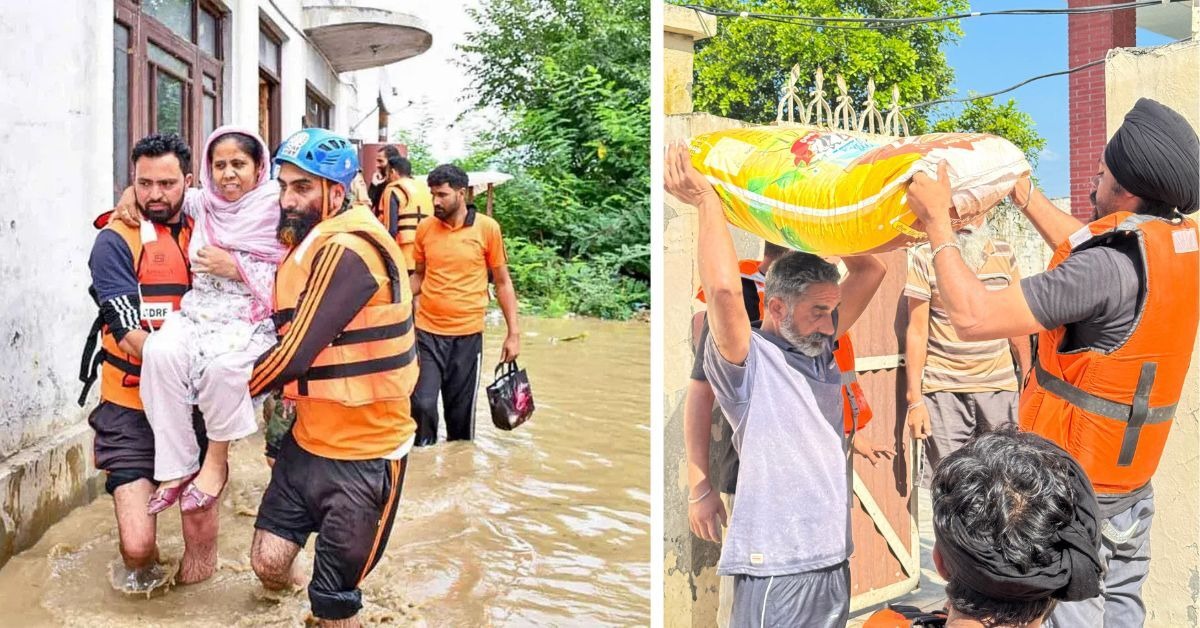
- Many have lost their homes and are forced to live in temporary shelters or open areas.
- Children and elderly are struggling without proper food, clothes, or medical care.
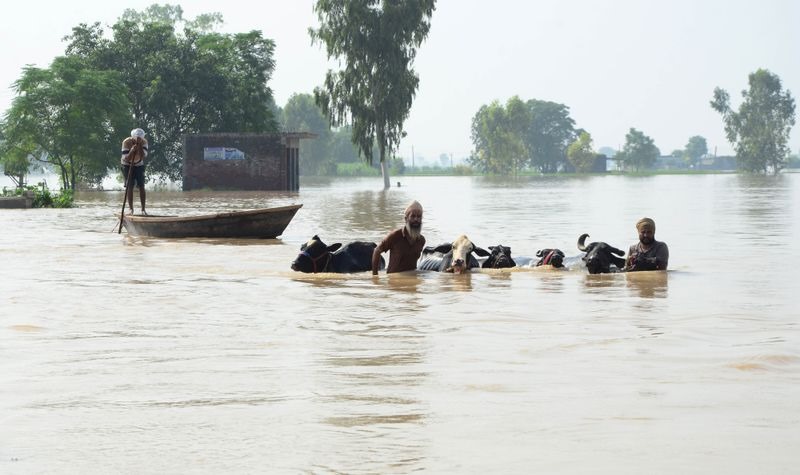
- Farmers have lost standing crops and livestock, their only source of livelihood.
- Drinking water has been contaminated, leading to rising health risks.
The Scale of Loss
- Thousands of acres of farmland destroyed, leaving farmers with huge debts.
- Entire villages submerged, houses collapsed, and roads washed away.
- Livestock and essential belongings lost overnight.
- Economic loss running into hundreds of crores, but emotional trauma is beyond calculation.
How You Can Help
At Thixindia Charity Foundation, we are working to provide immediate relief through:
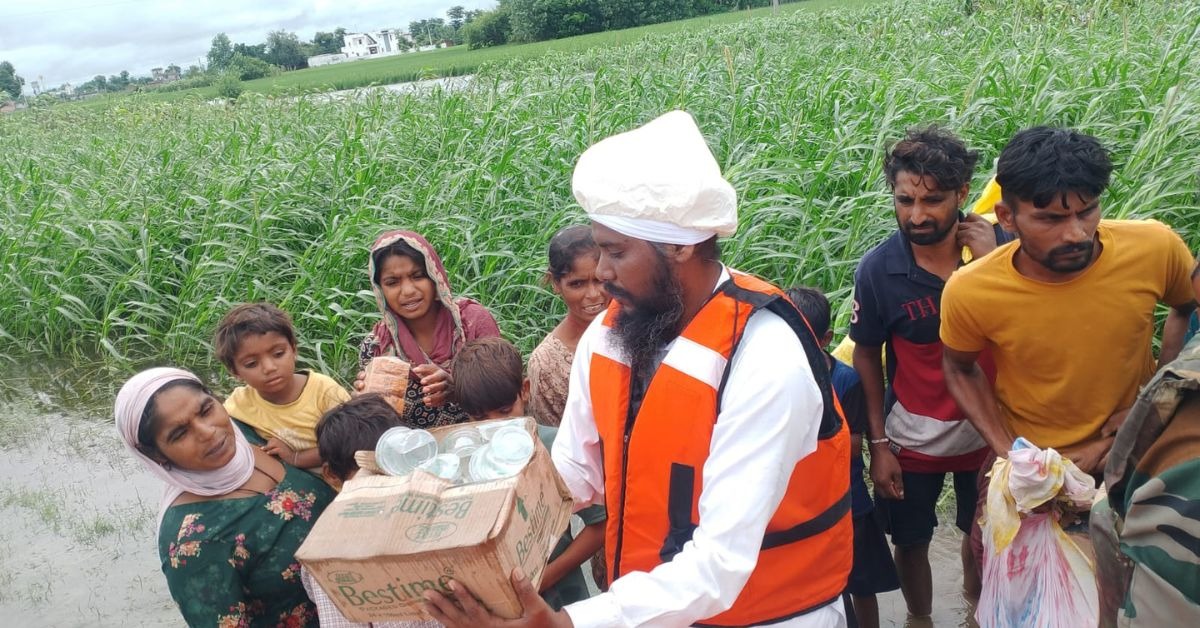
- Distribution of food packets, clean drinking water, and ration kits.
- Temporary shelters, clothes, and blankets for displaced families.
- Medical camps and essential medicines to prevent disease outbreaks.
- Long-term support for farmers and families to rebuild their lives.
Punjab Floods 2025
A note from Thixindia Charity Foundation
Punjab is facing its most destructive floods in decades. This page explains—in clear, human terms—why the flooding happened, how it unfolded, what families are experiencing right now, and the scale of losses. It also lays out exactly how your donation helps.
Donate NowHow Did This Flood Unfold?
Late August to early September 2025: A series of intense monsoon pulses over the western Himalayas dumped unusual volumes of rain over upper catchments in Himachal Pradesh and Jammu & Kashmir. These downpours pushed rivers like the Sutlej, Beas and Ravi to dangerous levels, causing flash flooding and widespread overbank flow downstream into Punjab.
To protect dam integrity as reservoirs filled rapidly, controlled releases from Bhakra, Pong and Ranjit Sagar added additional volumes to already swollen rivers. This is standard safety protocol in extreme inflow events, but it worsened flooding in low-lying districts along the river corridors.
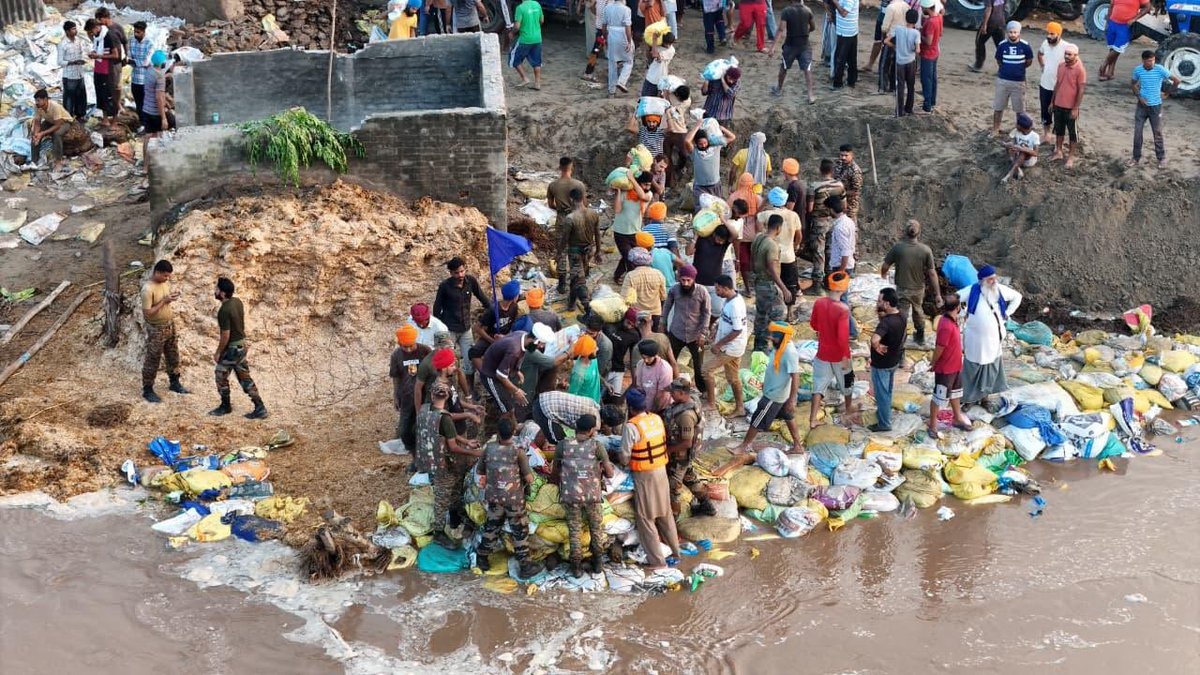
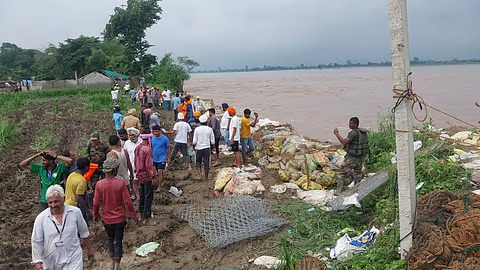
On the ground, breaches formed in embankments and protection bunds at multiple locations. In the border belt, sections of the fencing were washed away and large tracts of farmland turned into inland lakes within hours.
Why Did It Happen?
Natural Drivers
- Exceptional monsoon intensity: Punjab had far-above-normal rainfall (≈ 74% excess in August), part of a wider North India deluge. When such bursts align with saturated soils and high upstream inflows, river peaks become extreme.
- Hydrology of the plains: Punjab’s broad, flat alluvial plains and interconnected canal/drain network mean that once rivers overtop, water spreads widely and drains slowly.
Human-Amplified Risks
- Weak/under-maintained embankments & flood defenses: Several dhussi bandhs (temporary embankments) were not sufficiently strengthened pre-monsoon, increasing breach risk.
- Encroachment of floodplains: Cultivation and settlements inside natural flood corridors magnified damage when rivers reclaimed space.
- Siltation & drainage bottlenecks: Reduced carrying capacity from silt build-up, blocked drains/choes, and aging urban sewerage systems contributed to both rural overland flooding and urban flash floods (e.g., in parts of Ludhiana/Jalandhar).
- Operational & coordination challenges: Public debate continues over dam releases, maintenance, and inter-agency coordination—underscoring the need for transparent protocols and stronger pre-monsoon readiness.
Where and Who is Most Affected?
Flooding is statewide, but river-adjacent and low-lying districts are bearing the brunt. Gurdaspur is among the worst affected (by affected villages and crop loss), with severe impacts also reported in Amritsar, Ferozepur, Fazilka, Kapurthala, Hoshiarpur, Pathankot, Tarn Taran, and Rupnagar (Ropar).
What Life Looks Like Right Now
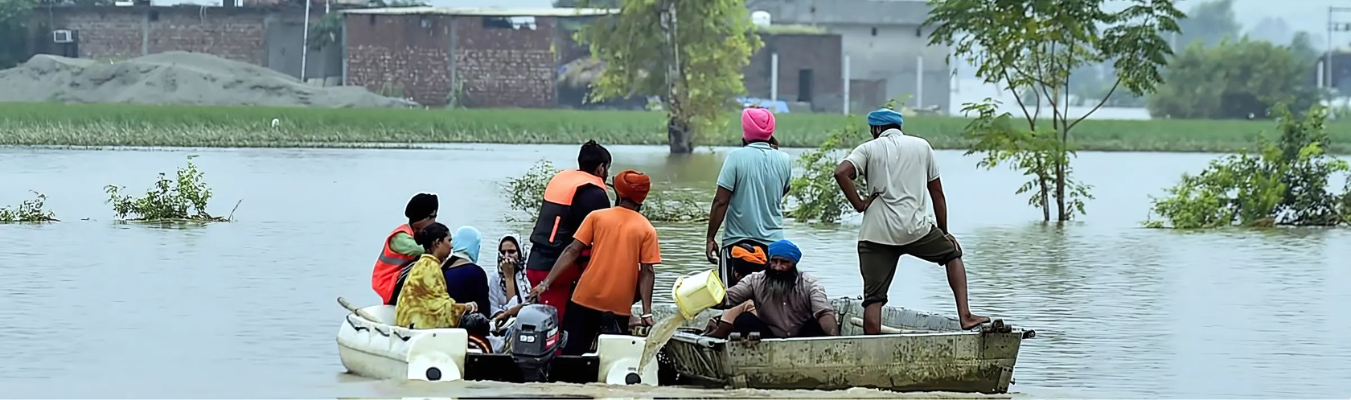
Families report days without reliable electricity, contaminated drinking water, damaged homes, and livestock and stored grain losses. Many have sheltered on upper floors/rooftops or moved to relief camps set up in schools, gurdwaras and community halls while waters recede. Fields of paddy, cotton and sugarcane are flattened or rotting, cutting off livelihoods precisely when input debts are highest.
Immediate risks include unsafe water, water-borne disease, snake/scorpion bites, and fodder shortages for animals. With canals and roads damaged, access to healthcare and supplies is inconsistent in pockets still waterlogged.
How Your Donation Helps—Concretely
In the First 72 Hours
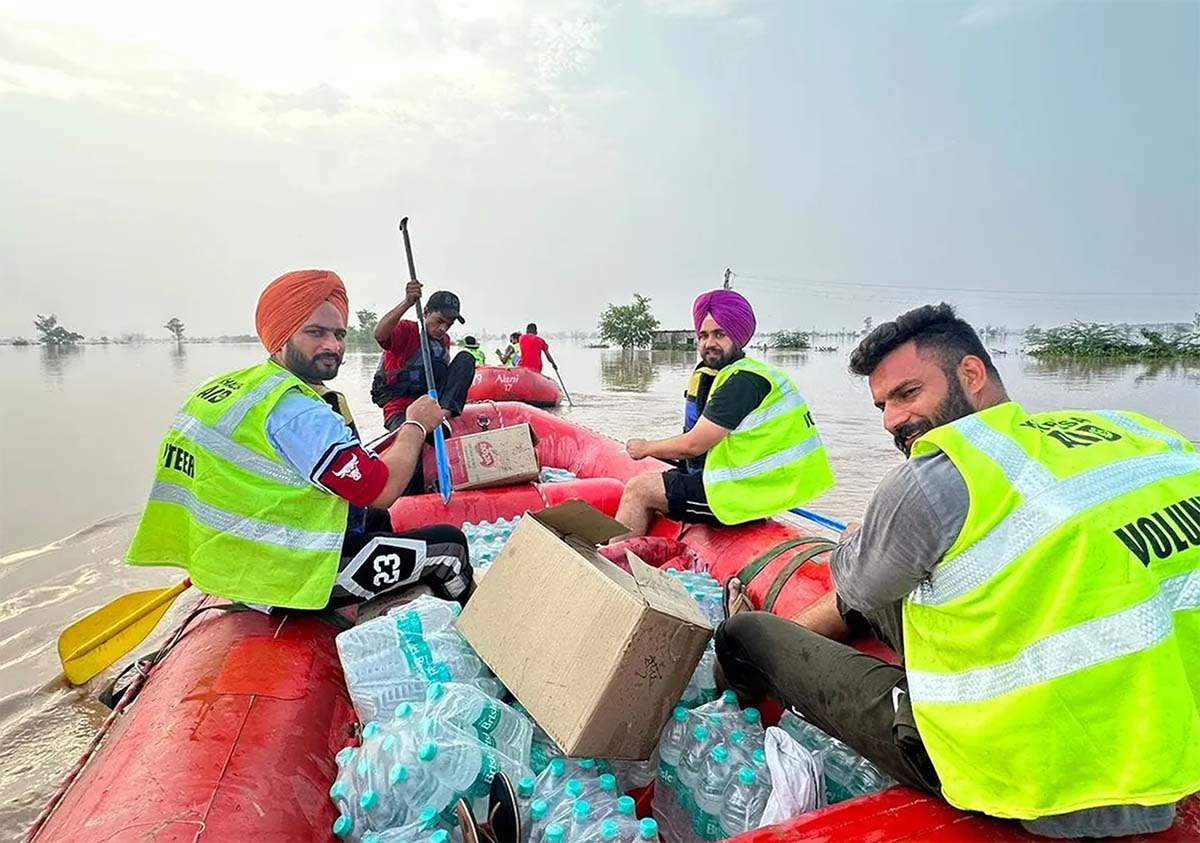
- Safe-water kits (chlorine tablets, filters), ORS, hygiene kits, sanitary supplies
- Ready-to-eat meals & dry ration packs; fodder for livestock
- Emergency tarpaulins, floor mats, mosquito nets; torch/solar lamps; basic medicines
Over the Next 2–8 Weeks
- Cash assistance for the most vulnerable (single-headed households, elderly, persons with disabilities)
- Rapid house repair kits (GI sheets, tools, lime, bleaching powder) and school clean-up kits
- Seed & input support so smallholders can replant quickly; community fodder banks
3–12 Months (Recovery)
- Livelihood revival grants (tools, small equipment)
- Repair of drinking-water points and village drains; support for WASH in schools/anganwadis
- Psycho-social support & child-friendly spaces with local partners
Our Operating Principles
- Last-mile focus: We work through local gurdwaras, panchayats, youth groups, and women’s SHGs to reach cut-off hamlets first.
- Dignity & choice: Whenever markets function, we prioritize cash/voucher aid over in-kind to restore agency.
- Local procurement: Buy within Punjab when possible to support local traders and reduce logistics time.
- Open books: We publish weekly distribution logs, photos (with consent), and third-party audits on our site.
- No-waste logistics: Pre-positioned kits, tamper-proof packaging, and community verification at the point of distribution.


We are humbled and grateful to share that Thixindia Charity Foundation has received ₹15 Lakh in donations so far for our Punjab Flood Relief efforts. This generosity has already helped us provide urgent support such as food packets, drinking water, medical supplies, and temporary shelters to affected families. But the devastation caused by the floods is far greater than what these funds alone can cover. Entire villages have been submerged, thousands of families have lost their homes and livelihoods, and children, elderly, and vulnerable communities are in desperate need of long-term care and rehabilitation. To meet these urgent and ongoing needs, our goal is to raise ₹10 Crore.
What We Need Most Right Now
- Unrestricted donations: Lets us close life-saving gaps fast.
- Bulk supplies: Water treatment tablets, tarpaulins (12×18 ft or larger), mats, mosquito nets, cattle fodder, and bleaching powder.
- Volunteers: With Punjabi/Hindi language skills for needs assessments, data entry, and warehouse ops.
Your donation can bring hope to Punjab’s flood-affected families. Together, we can help them recover from this disaster and rebuild a stronger future.
 Donation to ThixIndia are tax exempted under section NITI Aayog | 12A | 80G
ThixIndia is reducing the burden on the health system with make-shift dedicated COVID-19 health centres
Our Policies
Top Locations